
How to Select Antifreeze for Chillers?
2025-04-15
In order to smoothly improve the cooling performance of the chiller, after a period of use, enterprises need to regularly maintain the chiller.

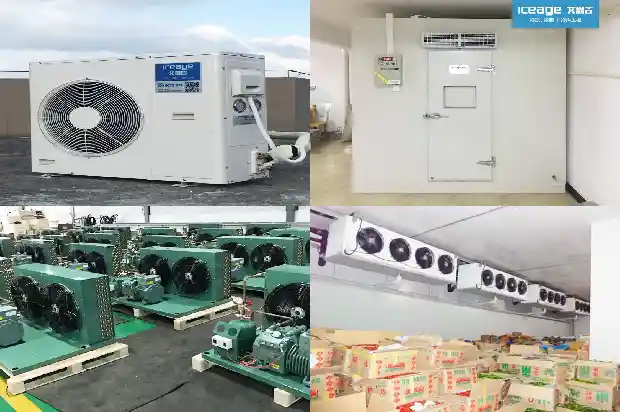
High-quality antifreeze can keep the chiller running safely and stably. If the enterprise neglects to replace the antifreeze during the maintenance of the chiller, the equipment is likely to experience high-temperature faults after running for a long time. When the chiller is in a high-temperature fault situation, it not only affects the operating power of the chiller but also leads to a continuous shortening of the operating life of the chiller unit. The shortening of the chiller's life affects the cost of the enterprise using the chiller, resulting in more energy consumption as the enterprise uses the chiller for a longer time.
So, how should the antifreeze for the chiller be selected?
- When selecting antifreeze products, in order to maintain the safe and stable operation of the equipment, it is necessary to regularly select antifreeze with a lower concentration for replacement.
- When purchasing antifreeze for the chiller, it is necessary to select products with a longer service life. If the chiller is used for a long time and the probability of the equipment malfunctioning is low, then the cost of the enterprise replacing the antifreeze can be comprehensively controlled. The longer the service life of the antifreeze, the lower the cost of the enterprise replacing the antifreeze, thus prolonging the service life of the chiller. The longer the life of the equipment, the higher the cost performance of the enterprise using the industrial chiller, ensuring that the enterprise can complete the production task at a low cost.
When replacing the antifreeze product, it is necessary to select an antifreeze that is suitable for the operating standards of the equipment.
Commonly used antifreezes mainly include:
① Ethanol.
② Glycerol. The price after mixing with water is very high, and it is not very economical.
③ Ethylene glycol. The freezing point of ethylene glycol is -11.5°C and the boiling point is 197.4°F. After mixing with water, the lowest freezing point can reach -68°F; Ethylene glycol is prone to corrode metals, and an anti-corrosion agent should be added when preparing the antifreeze. Generally, 2.5 to 3.5 grams of disodium hydrogen phosphate and 1 gram of dextrin are added to each liter of antifreeze; Ethylene glycol has strong hygroscopicity, and the storage container should be sealed; Ethylene glycol is not easy to volatilize, and the dosage is small during preparation, so it is widely used. The thermal expansion of various antifreezes is relatively large, and it can only be filled to 95% of the total capacity of the cooling system during filling; When preparing the antifreeze, its freezing point should be 5 degrees lower than the lowest temperature in the area of use.
① Ethanol.
② Glycerol. The price after mixing with water is very high, and it is not very economical.
③ Ethylene glycol. The freezing point of ethylene glycol is -11.5°C and the boiling point is 197.4°F. After mixing with water, the lowest freezing point can reach -68°F; Ethylene glycol is prone to corrode metals, and an anti-corrosion agent should be added when preparing the antifreeze. Generally, 2.5 to 3.5 grams of disodium hydrogen phosphate and 1 gram of dextrin are added to each liter of antifreeze; Ethylene glycol has strong hygroscopicity, and the storage container should be sealed; Ethylene glycol is not easy to volatilize, and the dosage is small during preparation, so it is widely used. The thermal expansion of various antifreezes is relatively large, and it can only be filled to 95% of the total capacity of the cooling system during filling; When preparing the antifreeze, its freezing point should be 5 degrees lower than the lowest temperature in the area of use.
Related Articles
- Analysis of Common Faults of Chillers
- Screw Chiller Units and Centrifugal Chillers
- What Are the Common Causes of High - pressure Faults in Chillers?
- What Are the Differences Between Chillers and General Water - cooled Equipment?
- Maintenance Strategies for the Working Cycle and Electrical Automatic Control of Chillers
- What are Refrigeration Equipment? What's the Principle of Chillers?
- Common Faults of Industrial Chillers
- Can You Solve These 4 Common Issues of Industrial Chillers?
- Common Faults and Corresponding Solutions of Chillers During Use
- How to Install and Maintain Industrial Chillers?
- Introduction to Lithium Bromide Absorption Chillers
- 8 Maintenance Procedures for Industrial Chillers
- Effective Measures to Prevent Compressor Failures in Industrial Chillers
- Reference Points for Selection of Screw - type Chillers
- How to accurately choose water-cooled and air-cooled chillers?
- When to Consider Replacing Industrial Chillers
- Analysis and Treatment of Common Low-Pressure Faults in Chillers
- Analysis and Treatment of Common Low Pressure Faults in Chillers