
What is a refrigerated container?
2024-07-25
Refrigerated containers refer to containers that are specially designed with certain heat insulation performance, can maintain a certain low temperature, and are suitable for the refrigerated storage and transportation of various foods. Refrigerated containers must be very sturdy and able to withstand harsh transportation conditions. Their refrigeration devices must also meet the following requirements:
Full automatic heating, cooling and defrosting;
Full automatic heating, cooling and defrosting;
- It can be driven independently or connected to an external power supply;
- According to the requirements of the loaded food, the temperature can be adjusted within a certain range, and the temperature deviation is small;
- High impact resistance and good vibration resistance;
- The ventilation system can provide about 50m3/h of fresh air for each square meter of the refrigerated container volume;
- The relative humidity of the air is 85% - 95% to prevent drying.
In terms of the refrigeration system, a refrigerated container is equivalent to a single room of a small refrigerated warehouse or an assembled refrigerated warehouse. Most of them are air-cooled condensing units, which use direct air blowing for cooling. The temperature adjustment range inside the container is large, and it can generally maintain -18°C to -12°C.
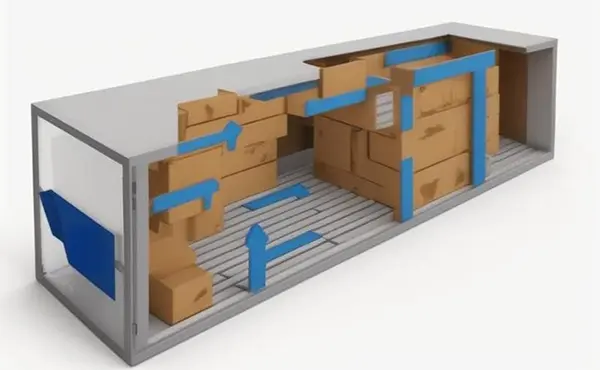
Classification of refrigerated containers
Classified according to the refrigeration method
(1) External refrigerated containers. There is no refrigeration device, the container has a good heat insulation structure, and there is a hose connector at the end of the container, which can be connected to the refrigeration device of the ship or onshore freezing station to supply the cold source to the container.
(2) Built-in refrigerated containers. The container is equipped with a refrigeration device, which is powered by the ship or onshore power supply, or has its own generator for the operation of the refrigeration device to ensure the supply of cold to the container.
(3) Refrigerated plate refrigerated containers. Use the low-temperature eutectic solution of the refrigerated plate for cold storage and provide the cold source to the container.
(4) Liquid nitrogen or dry ice refrigerated containers. Use liquid nitrogen spray or dry ice to provide the cold source to the container.
(5) Controlled atmosphere refrigerated containers. It is a special refrigerated container that uses the control of the concentrations of gases such as oxygen, carbon dioxide and ethylene in the air in the container to inhibit the breathing and ripening of fruits and vegetables, and reduce the internal temperature to the required storage temperature.
Classified according to the refrigeration method
(1) External refrigerated containers. There is no refrigeration device, the container has a good heat insulation structure, and there is a hose connector at the end of the container, which can be connected to the refrigeration device of the ship or onshore freezing station to supply the cold source to the container.
(2) Built-in refrigerated containers. The container is equipped with a refrigeration device, which is powered by the ship or onshore power supply, or has its own generator for the operation of the refrigeration device to ensure the supply of cold to the container.
(3) Refrigerated plate refrigerated containers. Use the low-temperature eutectic solution of the refrigerated plate for cold storage and provide the cold source to the container.
(4) Liquid nitrogen or dry ice refrigerated containers. Use liquid nitrogen spray or dry ice to provide the cold source to the container.
(5) Controlled atmosphere refrigerated containers. It is a special refrigerated container that uses the control of the concentrations of gases such as oxygen, carbon dioxide and ethylene in the air in the container to inhibit the breathing and ripening of fruits and vegetables, and reduce the internal temperature to the required storage temperature.
The main characteristics of the use of refrigerated containers
(1) Refrigerated containers have a high utilization rate of loading volume, flexible operation and scheduling, and strong economic use.
(2) During the use of refrigerated containers, the entire container can be hoisted, with high loading and unloading efficiency and relatively low transportation costs. The structure and technical performance of the new refrigerated containers are more reasonable and advanced, and have wide applicability.
(3) Under certain conditions, refrigerated containers can be used as mobile cold storage to adjust the market supply and bring good economic benefits to marketers.
(4) Refrigerated containers can be used for multimodal transportation of various means of transportation, without the need to change goods in the middle, and the goods can be continuously maintained at the required low temperature state.
(5) For domestic and international "cold chain" transportation, it can realize "country-to-country" direct transportation from the place of origin to the point of sale, providing the best storage and transportation conditions to ensure the freshness of various foods.
(1) Refrigerated containers have a high utilization rate of loading volume, flexible operation and scheduling, and strong economic use.
(2) During the use of refrigerated containers, the entire container can be hoisted, with high loading and unloading efficiency and relatively low transportation costs. The structure and technical performance of the new refrigerated containers are more reasonable and advanced, and have wide applicability.
(3) Under certain conditions, refrigerated containers can be used as mobile cold storage to adjust the market supply and bring good economic benefits to marketers.
(4) Refrigerated containers can be used for multimodal transportation of various means of transportation, without the need to change goods in the middle, and the goods can be continuously maintained at the required low temperature state.
(5) For domestic and international "cold chain" transportation, it can realize "country-to-country" direct transportation from the place of origin to the point of sale, providing the best storage and transportation conditions to ensure the freshness of various foods.
Suitable goods for refrigerated containers
(1) Frozen goods such as fish, meat, and egg pulp;
(2) Low-temperature goods such as meat, citrus, melons, and cheese;
(3) Goods such as films and certain medicines that need to maintain a certain temperature.
(1) Frozen goods such as fish, meat, and egg pulp;
(2) Low-temperature goods such as meat, citrus, melons, and cheese;
(3) Goods such as films and certain medicines that need to maintain a certain temperature.
General requirements for the use of refrigerated containers
① After loading the refrigerated container, the original quality of the refrigerated or frozen goods should be inspected and described on the manifest;
② During the loading process, the principle of strict loading and stacking should be followed to avoid unbalanced cooling caused by short circuits of cold air and reduce the cooling efficiency of the refrigeration device;
③ When transporting frozen goods over long distances, the temperature difference between the set temperature and the actual temperature in the container should not exceed 3°C. If transporting cooled goods, the temperature error should not be greater than 0.5°C, and preferably not greater than 0.25°C;
④ When containers transport fresh fruits, vegetables, etc., the vents should be opened in time for ventilation and air exchange. However, when transporting frozen goods, the vents should be closed;
⑤ When transporting cooled goods in carton packaging, ventilation should be carried out in time according to the outdoor temperature and humidity conditions to keep the air in the container dry and prevent condensation on the outer surface of the packaging box.
① After loading the refrigerated container, the original quality of the refrigerated or frozen goods should be inspected and described on the manifest;
② During the loading process, the principle of strict loading and stacking should be followed to avoid unbalanced cooling caused by short circuits of cold air and reduce the cooling efficiency of the refrigeration device;
③ When transporting frozen goods over long distances, the temperature difference between the set temperature and the actual temperature in the container should not exceed 3°C. If transporting cooled goods, the temperature error should not be greater than 0.5°C, and preferably not greater than 0.25°C;
④ When containers transport fresh fruits, vegetables, etc., the vents should be opened in time for ventilation and air exchange. However, when transporting frozen goods, the vents should be closed;
⑤ When transporting cooled goods in carton packaging, ventilation should be carried out in time according to the outdoor temperature and humidity conditions to keep the air in the container dry and prevent condensation on the outer surface of the packaging box.
Related Articles
- What Impact Does Lubricating Oil Have on the Refrigeration System???
- What Are the Common Problems of Oil Return in Compressors?
- What Key Points Should Be Noted in the Transportation and Storage of Vaccine Cold Storage Projects?
- What Knowledge Points Should Users Know about the Safety Valve in the Refrigeration System?
- What Are the Reasons Why the Temperature in the Quick-freezing Cold Storage Cannot Be Lowered?
- How to Choose Between Inverter Air Conditioners and Fixed-frequency Air Conditioners? Let's See What Maintenance Technicians Say
- What Malfunction Does "E2" Indicate on an Air Conditioner?
- What Are the Advantages of a Quick - freezing Cold Storage?
- What Causes the Evaporation Temperature in a Cold Storage Refrigeration System to Be Too Low?
- What to Do When the Compressor of a [Refrigerated and Frozen Display Cabinet] Unit Makes Abnormal Noises?
- What Are the Differences Among Freezer Warehouses, Quick - freezing Warehouses and Fresh - keeping Warehouses?
- What Should Be Done When These Problems Occur in the Semi-hermetic Piston Compressor of the Cold Storage?
- What Are the Daily Maintenance Methods for Controlled Atmosphere Cold Storage Equipment?
- What are the Differences between Controlled Atmosphere Cold Storage Technology and Traditional Cold Storage Technology?
- What are the Reasons and Hazards of Uneven Liquid Distribution in the Refrigeration System?
- Why Does the Refrigeration System Definitely Need Subcooling? What Is the Significance of Subcooling for the Refrigeration System?
- What You Must Know About the Evaporation Temperature of the Refrigeration System!
- Why Does the Air Cooler Frost? What Are the Defrosting Methods?