
What is Cascade Refrigeration?
2025-02-15
Cascade refrigeration refers to a refrigeration device composed of two or more single - stage (or two - stage) compression refrigeration cycle systems using two or more refrigerants. It is generally used in low - temperature facilities with temperatures ranging from - 120°C to - 60°C, such as ultra - low - temperature cold storages, rapid freezing process facilities, the biological and chemical industrial fields that require ultra - low - temperature processes, and cryogenic chambers.
In a common cascade refrigeration device, the system structure is divided into a high - temperature stage part and a low - temperature stage part. The high - temperature part uses a medium - temperature refrigerant, and the low - temperature part uses a low - temperature refrigerant. The evaporation of the refrigerant in the high - temperature part causes the refrigerant in the low - temperature part to condense. The two parts are connected by a condenser - evaporator to form an integrated unit. The condenser - evaporator serves as both the evaporator of the high - temperature part and the condenser of the low - temperature part.
I. Low - temperature Stage Part
The low - temperature refrigerant gas from the evaporator passes through the low - temperature stage regenerator and then is compressed by the low - temperature stage compressor and enters the oil separator.
II. High - temperature Stage Part
The high - temperature refrigerant gas that evaporates after absorbing heat in the condenser - evaporator is sucked in and compressed by the high - temperature stage compressor and then enters the air - cooled condenser to condense, releasing heat to the cooling medium. The condensed high - temperature refrigerant liquid enters the liquid receiver, and then passes through the drier - filter and the throttle valve to enter the condenser - evaporator, completing a refrigeration cycle.
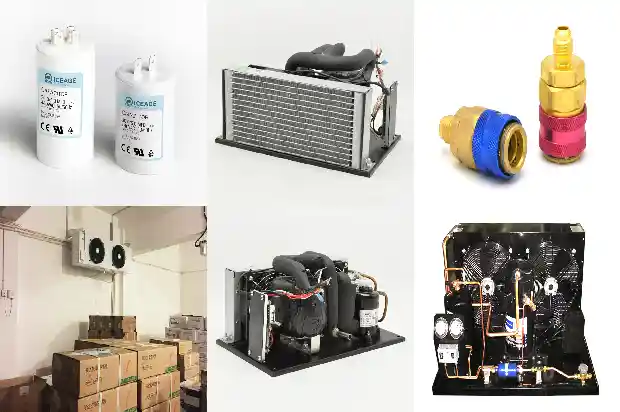
Different from ordinary single - stage compression refrigeration devices, cascade refrigeration devices have two special components: the condenser - evaporator and the expansion vessel. Among them:
I. Condenser - evaporator
Generally, a double - pipe heat exchanger or a plate - type heat exchanger is used.
II. Expansion Vessel
After the cascade refrigeration device stops operating, the temperature of each part of the system will gradually rise. The low - temperature refrigerant will vaporize into steam, and the pressure will continue to increase. Since other components and pipelines in the refrigeration device have a certain limit of pressure - bearing capacity, in order to prevent the pressure from rising beyond the limit value, an expansion vessel is installed in the low - temperature part. When the pressure reaches a certain value, the pressure control valve automatically opens, allowing a part of the refrigerant to enter the expansion vessel, restricting the pressure in the system from being too high.
When starting the cascade refrigeration device, generally, the high - temperature part is started first, and then the low - temperature part. The operation should be carried out strictly in accordance with the manufacturer's requirements.
Related Articles
- Basic Knowledge of Refrigeration Maintenance and Debugging
- Cold Insulation Construction in Refrigeration Equipment or Refrigeration Engineering
- Practical: The Five Most Fundamental Problems in Air Conditioning Refrigeration
- Precautions for the Installation of Automatic Instruments in Refrigeration Devices (Part Two)
- Why is the Evaporator Position Higher than the Compressor? Several Key Points of Oil Return in the Refrigeration System!
- You May Not Know All These Basic Knowledge of Refrigeration and Air Conditioning!
- Basic Knowledge of Refrigeration and Air Conditioning: You May Not Know It All!
- The 5 Most Fundamental Problems of Air Conditioning Refrigeration
- Six Common Refrigeration Methods
- What Impact Does Lubricating Oil Have on the Refrigeration System???
- Knowledge of Air Conditioning Basics and Refrigeration Principles
- The frosting directions of the refrigeration system are different, and the causes of frosting are completely different!
- Do You Master and Understand the Ten Key Temperatures of the Refrigeration System?
- Common Knowledge of Refrigeration and Air Conditioning Systems!
- These have the most direct relationship with the refrigeration effect
- HVAC (Heating, Ventilation and Air Conditioning) — The Influence of Lubricating Oil on the Refrigeration System
- Have You Encountered These Main Reasons for the Burning of Refrigeration Compressor Windings?
- Methods of Vacuuming, Leak Detection, Refrigerant Recovery and Charging for the Refrigeration System of a Cold Storage