
Why Does the Compressor Lack Oil? Why Is There an Oil Film on the Evaporator?
2025-03-16
The compressor is a complex machine that operates at high speed. Ensuring sufficient lubrication for moving parts such as the compressor crankshaft, bearings, connecting rods, and pistons is a basic requirement for maintaining the normal operation of the machine. For this reason, compressor manufacturers require the use of lubricating oil of a specified brand and regular inspection of the oil level and color of the lubricating oil.
Lack of oil is one of the easily distinguishable compressor failures. When the compressor lacks oil, there is very little or even no lubricating oil in the crankcase.
The compressor is a special air pump. A large amount of refrigerant gas is discharged while a small part of the lubricating oil is also carried away (referred to as oil carry - over or oil running). Oil carry - over in the compressor is inevitable, only the speed of oil carry - over varies.
In the exhaust of a semi - hermetic piston compressor, there is approximately 2 - 3% of lubricating oil, while for a scroll compressor, it is 0.5 - 1%. For a 6 - cylinder compressor with a displacement of 100 m³/hr and a crankcase oil storage capacity of 6 liters, 3% of oil carry - over means an oil carry - over rate of approximately 0.3 - 0.8 liters per minute, or the compressor can operate without oil return for more than ten minutes. If the lubricating oil discharged from the compressor does not return, the compressor will lack oil.
There are two ways for the compressor to return oil: one is oil return through the oil separator, and the other is oil return through the suction line.
The oil separator is installed on the exhaust pipeline of the compressor. Generally, it can separate 50 - 95% of the carried - over oil. It has a good oil - returning effect and a fast speed, greatly reducing the amount of oil entering the system pipeline, thus effectively extending the operation time without oil return.
In refrigeration systems of cold storage with particularly long pipelines, flooded - type ice - making systems, and freeze - drying equipment with very low temperatures, it is not uncommon that there is no oil return or very little oil return for more than ten minutes or even dozens of minutes after startup.
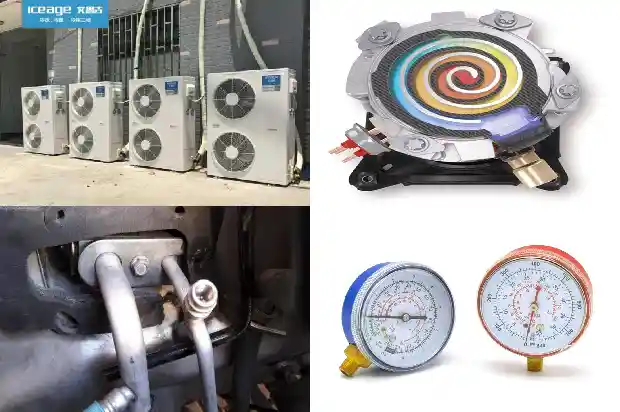
The lubricating oil that has not been separated will enter the system and flow in the pipeline along with the refrigerant, forming an oil cycle. The lubricating oil enters the evaporator.
On one hand, due to the low temperature and low solubility, part of the lubricating oil separates from the refrigerant.
On one hand, due to the low temperature and low solubility, part of the lubricating oil separates from the refrigerant.
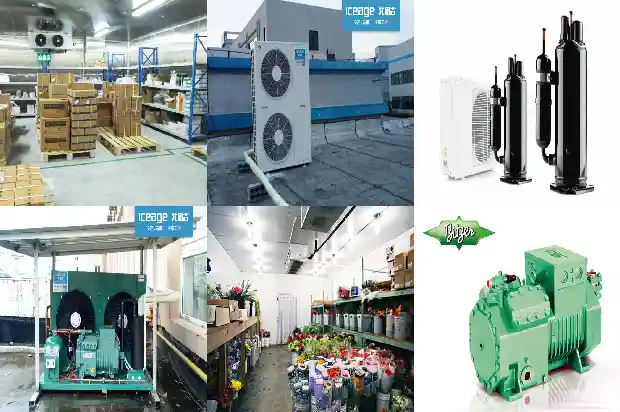
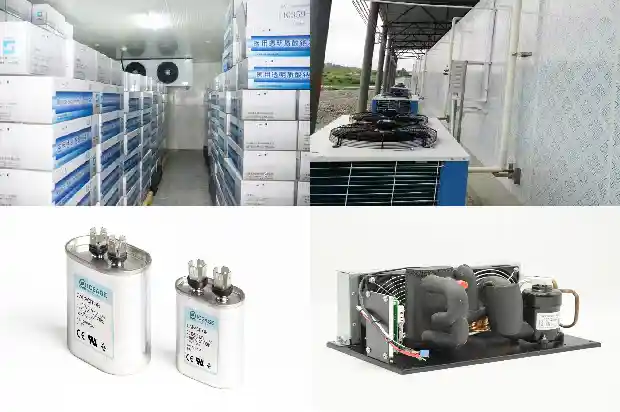
In practical applications, oil - return problems caused by improper design of the evaporator and suction pipeline are not rare. For R22 and R404A systems, oil return in flooded - type evaporators is relatively difficult, and the design of the system's oil - return pipeline must be very careful. For such systems, using an efficient oil separator can greatly reduce the amount of oil entering the system pipeline and effectively extend the time without oil return in the suction pipeline after startup.
When the compressor is higher in position than the evaporator, an oil - return bend on the vertical suction line is necessary. The oil - return bend should be as compact as possible to reduce oil storage. The spacing between oil - return bends should be appropriate. When there are a relatively large number of oil - return bends, some lubricating oil should be added.
The oil - return pipeline of a variable - load system must also be carefully designed. When the load decreases, the suction gas velocity will decrease, and too low a velocity is not conducive to oil return. To ensure oil return under low - load conditions, a double - riser can be used for the vertical suction line.

Frequent startup of the compressor is not conducive to oil return. Since the compressor stops after running for a very short continuous time, a stable high - speed gas flow has no time to form in the suction line, and the lubricating oil can only remain in the pipeline. If the amount of oil return is less than that of oil carry - over, the compressor will lack oil. The shorter the running time, the longer the pipeline, and the more complex the system, the more prominent the oil - return problem will be.
During defrosting, the temperature of the evaporator rises, the viscosity of the lubricating oil decreases, and it is easier to flow. After the defrosting cycle, the refrigerant flow rate is high, and the retained lubricating oil will return to the compressor in a concentrated manner. Therefore, the frequency of the defrosting cycle and the duration of each cycle also need to be carefully set to avoid large fluctuations in the oil level and even oil hammer. When there is a relatively large refrigerant leakage, the suction gas velocity will decrease. If the velocity is too low, the lubricating oil will remain in the suction pipeline and cannot quickly return to the compressor. Liquid - carrying startup caused by refrigerant migration can also cause difficulties in internal oil return, but usually, the time is short, at most more than ten minutes.
Related Articles
- Why is the Evaporator Position Higher than the Compressor? Several Key Points of Oil Return in the Refrigeration System!
- Installation Project and Usage Introduction of Parallel Compressor Units in Cold Storage
- What Are the Common Problems of Oil Return in Compressors?
- Have You Encountered These Main Reasons for the Burning of Refrigeration Compressor Windings?
- Don't You Know These Four Aspects of Compressor Protection?
- 62 Compressor Questions: Read and Become an Expert!
- What to Do When the Compressor of a [Refrigerated and Frozen Display Cabinet] Unit Makes Abnormal Noises?
- Did You Know? Any Incompatibility between Base Oil and Refrigerant Could Destroy a Refrigeration Compressor
- Simple and Understandable Installation Method of Vibration - isolation Tubes for Refrigeration Compressors
- What Should Be Done When These Problems Occur in the Semi-hermetic Piston Compressor of the Cold Storage?
- A Complete Guide to the Operation, Malfunctions and Repair Methods of Dry Screw Refrigeration Compressors!
- Operation: Analysis of 20 Major Faults of Screw Compressors!
- Analyzing the Advantages and Disadvantages of 5 Types of Compressors in Cold Chain Technology
- Teach You to Completely Get Rid of the Surge Phenomenon of the Centrifugal Refrigeration Compressor
- Analysis of Causes for Exhaust Malfunctions of Screw - type Chiller Compressors
- Structure and Common Faults of Hermetic Compressors
- Why Does the Air - conditioner Compressor Stop Running in Less Than 1 Minute?
- Do You Know the Precautions for Using Rotary Refrigeration Compressors?